Fijian History
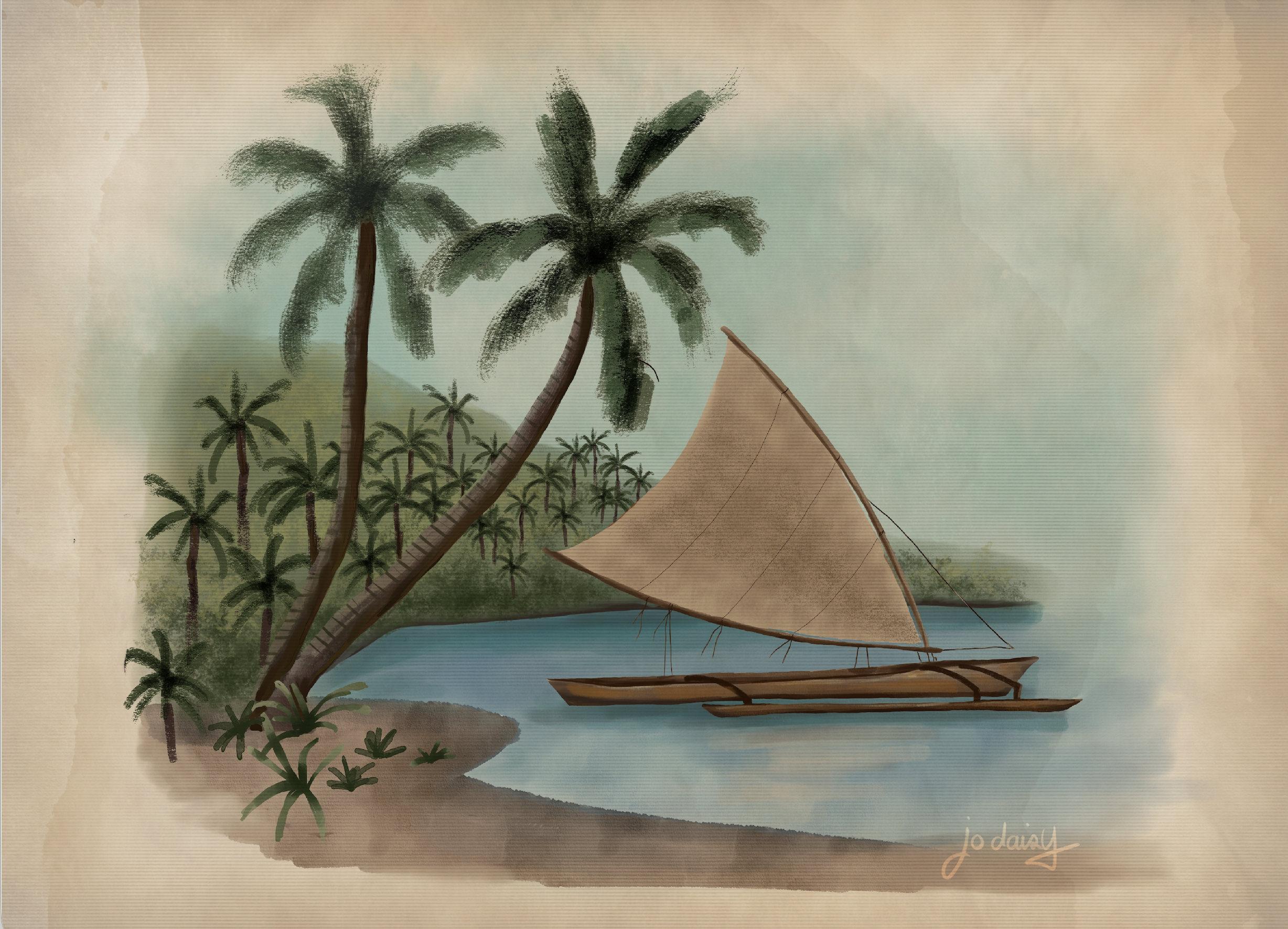
As you wake from your snooze to the quiet, lapping island waters, you may recall that last week, we heard that the ancient Fiji islanders were master navigators who originally migrated from Southeast Asia through Melanesia some 3500 years ago. If your brain automatically started singing “We Know the Way” from the Moana movie, that’s not a bad reference point. They did become the great drua builders of the Pacific.
We don’t know what they called themselves. We only know them as the Lapita, named for their distinctive dentate-stamped pottery that was left across the islands.
Migration
Following the initial Lapita settlement, Fiji underwent several significant cultural transformations due to later migration. The large wave of migrants, predominantly Melanesian initially arrived from areas such as Vanuatu and the Solomon Islands around the beginning of the Common Era. Melanesian and Polynesian cultures intermingled over the centuries and this fusion created the highly developed hierarchical society that Europeans encountered on arrival in the 17th century.
It was the Dutch explorer Abel Tasman, who accidentally sighted the islands in 1643, mapping parts of the archipelago, but did not land. He named them the Prince William Islands. British Captain, James Cook navigated through the southern islands in 1774 and Captain William Bligh charted the main islands in detail in 1789, sailing directly through the archipelago in an open boat after the famous mutiny on the HMS Bounty.
The First European Residents
It was a group of shipwrecked sailors and runaway convicts escaping Australia’s British penal colonies, who were the first Europeans to actually live among the Fijians.
In 1804, commercial grade sandalwood triggered a massive trade boom, bringing European and American traders to the islands to harvest the timber for export to China. Firearms were introduced to Fiji through this trade, drastically altering tribal warfare and shifting local balances of power.
In 1835, Methodist missionaries arrived from Tonga, and slowly converted the local chiefs to Christianity, which helped to diminish traditional warfare.
The Plantation Boom
In 1861, the American Civil War choked off global cotton supplies, causing prices to skyrocket. Over 2000 European settlers rushed to Fiji to establish large-scale cotton and sugar plantations.
To man their vast plantations, the settlers began aggressively importing indigenous labourers from other Pacific islands such as Vanuatu and the Solomons. The coercive, often violent means of recruitment was known as “blackbirding.”
British Annexation
By the early 1870’s relations between European settlers and indigenous Fijians deteriorated into violent land disputes and economic instability. The dominant indigenous leader, Ratu Seru Epenisa Cakobau, had established a fragile national government, but was drowning in heavy foreign debt.
Fearing a total breakdown of order, French or American intervention and aggressive settler lawlessness, Cakobau and other high chiefs signed the Deed of Cession on October 10, 1874. Fiji volutarily surrendered its sovereignty to Queen Victoria, officially becoming a British Colony.
On 10 October 1970, Fiji was restored as an independent nation within the Commonwealth. Ratu Sir Kamisese Mara was sworn in as the country’s first Prime Minister, and Queen Elizabeth II remained the ceremonial Head of State.
The High Note
But Fiji’s story is about so much more than conflict, conquest and colonial rule. Long before European ships appeared on the horizon, the skilled voyagers who navigated vast stretches of the Pacific carried with them traditions, craftsmanship and rich cultural heritage.
Among the most fascinating traces they left behind are fragments of the ancient Lapita pottery, offering us a glimpse into a world thousands of years old.
Next week, we’ll travel further back in time to discover more about the people behind these remarkable designs and what their pottery can tell us about Fiji’s earliest history.
If you’d like to follow along as these places make their way from sketchbook to finished artworks, you can join me on Instagram @jodaisyart, where I share the whole journey. And if you’re travelling along with me through The Traveller’s Telegram, I’m preparing the next mail drop as we speak. I hope you like it.
You can access the Archive here for your free printable stationery.
Sources and further reading.
Fiji Pocket Guide. “The best Travel Guide to Fiji. How to plan a trip to Fiji.” Updated 3 June 2026
Fiji Guide. “Fiji Islands Natural History,”by Rob Kay. 28 October 2009
Perspective Travel. “A Marvelous Trance in the Highlands of Fiji,” by Bruce Northam